Marocco: A Playful Script Handwritten Font for Bright, Child-Friendly Branding
Testing Marocco on a Bakery Branding Project
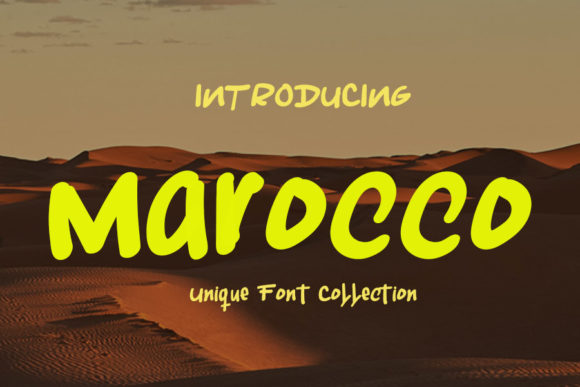
I recently opened a blank brand board for a local artisan bakery looking to refresh their visual identity. The brief called for a warm, approachable, and slightly whimsical tone—perfect for testing Marocco. As a script handwritten font, Marocco immediately stood out with its relaxed, brushed strokes and cheerful rhythm. I dropped it into the logo draft first, and the result felt instantly friendly, like a Saturday morning cartoon title card with a sprinkle of charm.
It wasn’t just about looks—Marocco’s character spacing and natural flow made it surprisingly legible at a glance, especially for a font in the handwritten category. I tried it on a few mockups: a bakery box label, a social media post, and a business card layout. Each time, the font held its own, adding a personal, handcrafted touch that elevated the design from generic to boutique.
Marocco for Children-Themed Branding and Packaging
One of the standout applications for Marocco is in children-themed branding. I tested it on a mock label for a new line of organic fruit snacks aimed at toddlers. Paired with a bright color palette—sunny yellows, berry pinks, and mint greens—Marocco came alive. The brushed texture of the letters gave the packaging a tactile, hand-painted feel without compromising clarity.
As a script handwritten font, Marocco works best when used for short bursts of text: product names, taglines, or special callouts. I wouldn’t recommend it for long body copy or small print, but for packaging headers or social media captions, it shines. It’s also a great choice for stickers, gift tags, and greeting cards that need a bit of personality.
Pairing Marocco with Supporting Fonts
Like any good display font, Marocco needs a strong supporting cast to balance its playful energy. I paired it with a clean sans serif for body text and subheadings. The contrast between Marocco’s loose, organic curves and the structured simplicity of the sans serif created a nice visual rhythm that felt modern yet warm.
I also tried a serif font for a more classic look on a boutique branding concept, but it clashed slightly—Marocco wants to be the star of the show, not part of a duo that leans too formal. For best results, keep the supporting typography neutral and let Marocco take center stage in headlines, logos, and accent phrases.
Marocco on the Web and Social Media
I tested Marocco on a homepage hero section and a few Instagram layouts. The font scaled beautifully on web headers, especially when used with a subtle shadow or soft background texture. It read well on both desktop and mobile views, though I noticed some fine details got lost at smaller sizes.
For social media, Marocco worked best in quote-based posts or event announcements where the text was short and impactful. It added a personal, hand-drawn quality that stood out in a feed full of stock templates. Just be mindful of contrast—use it against light or neutral backgrounds to ensure readability.
When Marocco Might Not Be the Right Choice
While Marocco brings a lot of personality to the table, it’s not a one-size-fits-all font. It’s best used as a headline or accent typeface, not for long-form content or formal business settings. I tried using it in a legal disclaimer section of a packaging mockup and immediately regretted it—too many fine strokes and tight spaces made it difficult to read at small sizes.
If your project leans more corporate, minimalist, or tech-focused, Marocco might feel out of place. Stick to more structured script fonts or modern sans serifs for those contexts. Also, check if the font includes webfont licenses if you plan to use it on a live website or digital product.
Final Thoughts: Marocco as a Creative Typography Tool
Marocco is a great addition to any designer’s toolkit, especially those working on child-friendly or boutique-style branding. It’s versatile enough to work across multiple design formats—logos, packaging, web headers, and social assets—while still maintaining a clear personality.
Before using it in final client work, I recommend testing it in multiple contexts: print, digital, color variations, and different sizes. Always check the font’s licensing terms, especially if you're using it for commercial projects, merchandise, or templates. With the right application, Marocco can elevate your design from standard to standout.