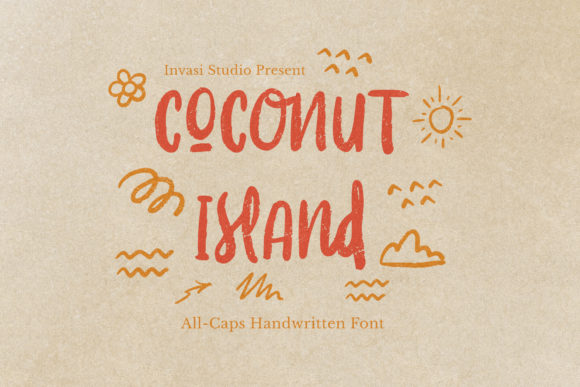
Coconut Island: A Trendy Brushed Handwritten Font for Makers and Designers
Coconut Island for Candle Labels and Product Packaging
I recently used Coconut Island on a set of candle labels for a small batch of soy candles I was preparing for a local market. As a maker, I’m always looking for a script handwritten font that feels both playful and professional. Coconut Island delivered that perfect balance. The soft brush strokes and slight texture gave the labels a hand-drawn charm, while the consistent baseline made them feel polished and ready for retail. I paired it with a clean sans serif for the scent name and found that the contrast elevated the overall design. If you're using it for packaging, especially small labels, make sure to adjust the tracking—this font shines best when it's not too cramped.
Coconut Island in Wedding Invitations and Stationery Design
Coconut Island is a fonts choice when you're designing wedding invitations or any formal stationery that still needs a personal touch. I tested it on a “Save the Date” postcard design and was struck by how warm and inviting it felt. It's not overly formal like some calligraphy fonts, but still elegant enough for a sophisticated celebration. Because of its brushed texture, it also pairs beautifully with watercolor backdrops or floral motifs. Just be mindful of the size—Coconut Island works best for names and short phrases rather than long paragraphs. For a layered look, try using it alongside a soft serif or a minimalist sans serif to keep the text readable but stylish.
Coconut Island for Digital Downloads and Planner Pages
If you create digital printables like planners, calendars, or bullet journals, you’ll appreciate how Coconut Island adds a handmade feel without looking too casual. I used it in a weekly spread to label sections like “Goals” and “Gratitude,” and it gave the layout a personal, curated vibe. As a script handwritten font, it’s expressive but not distracting, which is key for digital products that need to be both beautiful and functional. For digital use, I recommend checking the font's swashes and alternates—Coconut Island includes a few ligatures that add visual interest without compromising readability. Just make sure your audience is using software that supports OpenType features to get the most out of the font.
Coconut Island on Merchandise: Tote Bags, Mugs, and More
Coconut Island comes to life when printed on physical merchandise. I tested it on a tote bag mockup and a ceramic mug, both for a boutique-style product line. The font’s texture translated beautifully to screen printing, giving the tote a boutique feel. On the mug, the slightly uneven strokes added character, making it feel like a custom, artisan product. For these kinds of applications, I suggest using it for short phrases or names rather than longer text. It’s a display font at heart—perfect for logos, product names, and decorative phrases. If you're using a cutting machine like a Cricut or Silhouette, test the font at different sizes to see how the details hold up, especially in vinyl or iron-on materials.
Coconut Island for Social Media and Branding Graphics
As someone who designs both physical products and digital content, I found Coconut Island to be a versatile asset for social media graphics. Whether I was creating Instagram stories for a seasonal sale or Pinterest pins for a printable collection, this font brought a cohesive, branded look to all my visuals. It’s a creative font that works well in both light and dark color schemes, and its brushed texture helps it stand out against patterned backgrounds. When using Coconut Island for branding, consider pairing it with a clean sans serif for headers or subtext to maintain readability. And always double-check the licensing—this is a commercial font, so it’s great for Etsy listings, digital templates, and physical merchandise as long as you verify the usage rights.